
Why a rage room needs more than a strong wall
A rage room is not just a space with breakable items in it. The room has to be set up so people can move freely, see clearly and stay separated from anyone who should not be in the space. That starts with the structure itself. Strong barriers, secure doors and controlled entry points help keep the session contained, while the layout makes sure there is a clear path in and out for staff and participants.
In a busy city venue like Woodstock, where groups often arrive from Cape Town CBD, Observatory or Salt River after work, timing and control matter just as much as the physical room. Staff need to know who is entering, what session they are booked for and whether the room has been cleared between groups. A safe venue does not rush that part, even when the booking calendar is full.
The safety briefing sets the tone before anyone enters
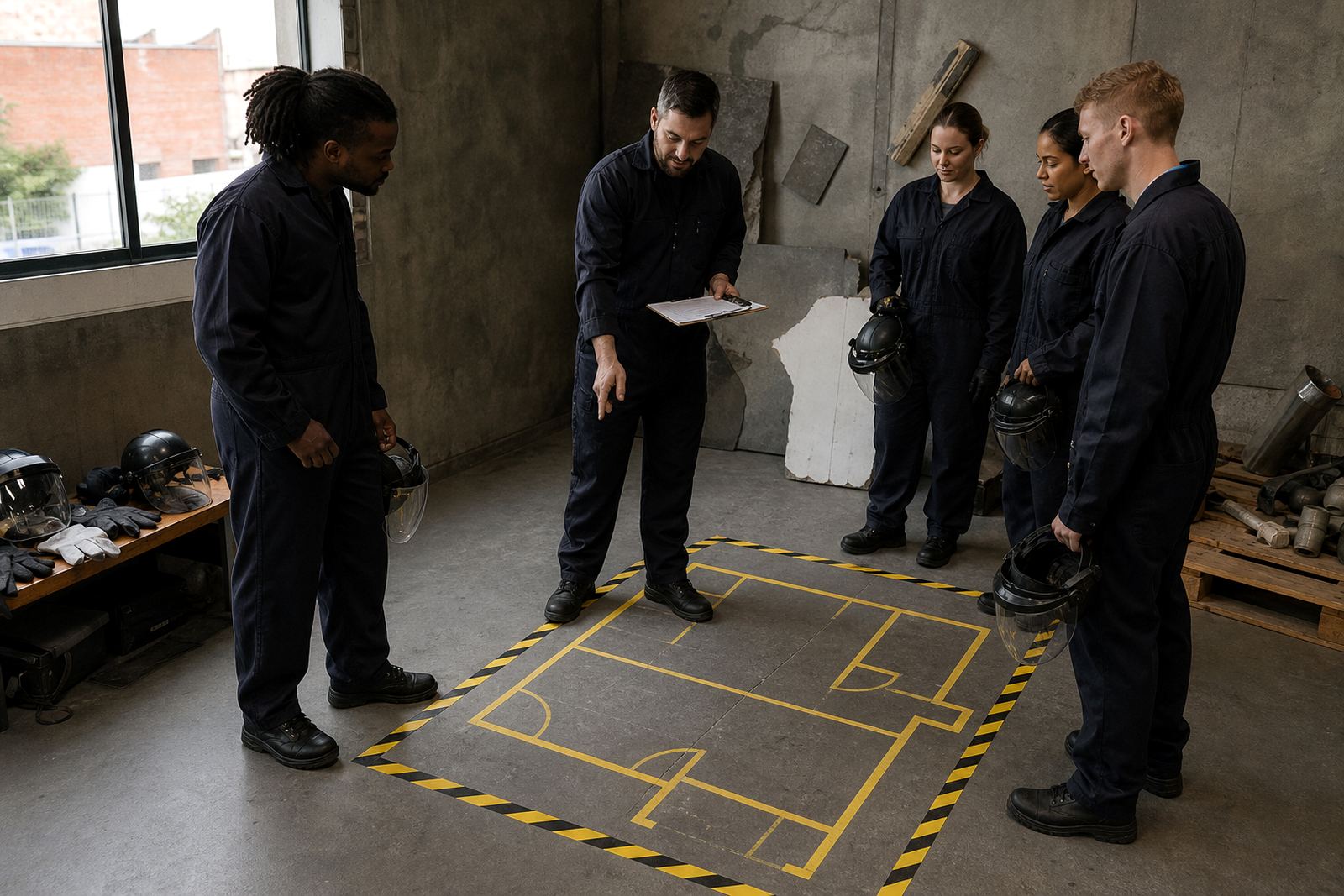
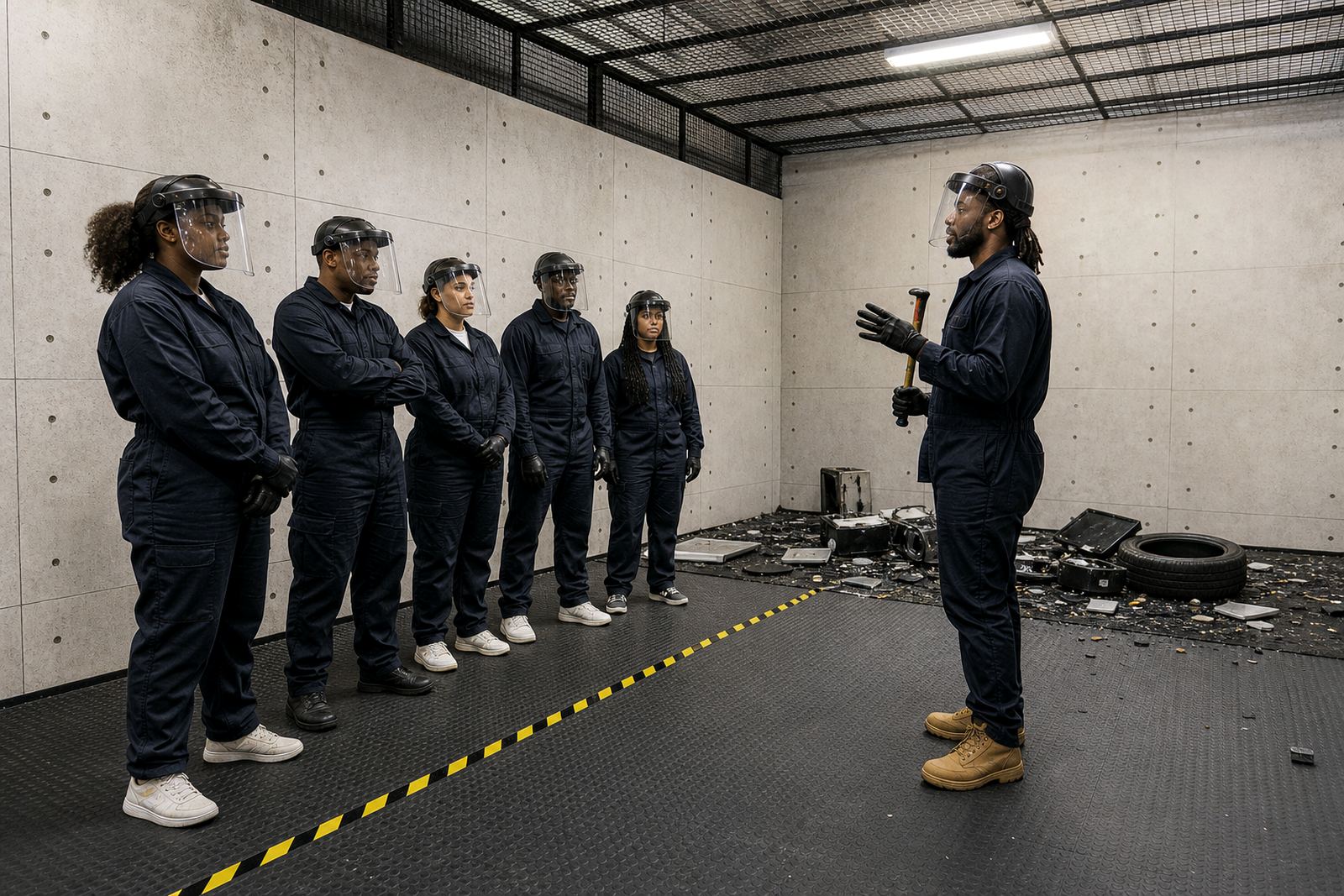
Before a session begins, everyone should get a briefing that is calm, direct and easy to follow. It should explain how the session works, what is allowed, what is not allowed and how to move around the room. People also need to know when to stop, where to stand when others are active and how to use the space without crowding each other.
A proper briefing is not only about rules. It helps people settle in, especially first-time visitors or groups that have booked a birthday, staff social or student event. If someone arrives nervous or unsure, clear instructions make a difference. The same is true when a group has a mix of ages and energy levels. Staff should be ready to repeat instructions, check understanding and answer questions before the door closes.
- Explain the session flow before entry
- Show the safe movement zone inside the room
- Confirm who is supervising and where they will stand
- Make sure everyone understands the stop signal
Protective gear is not optional, it is part of the booking
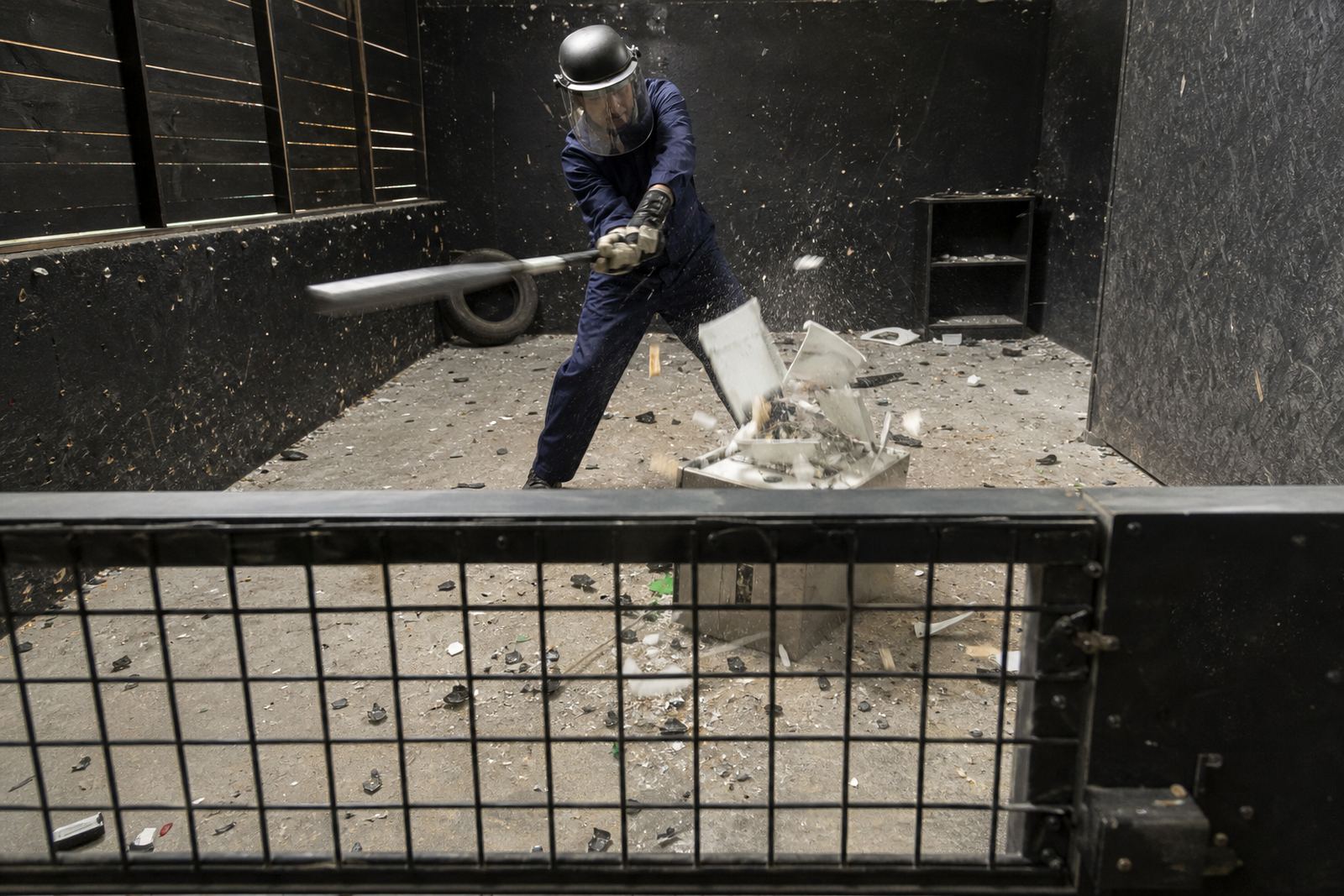
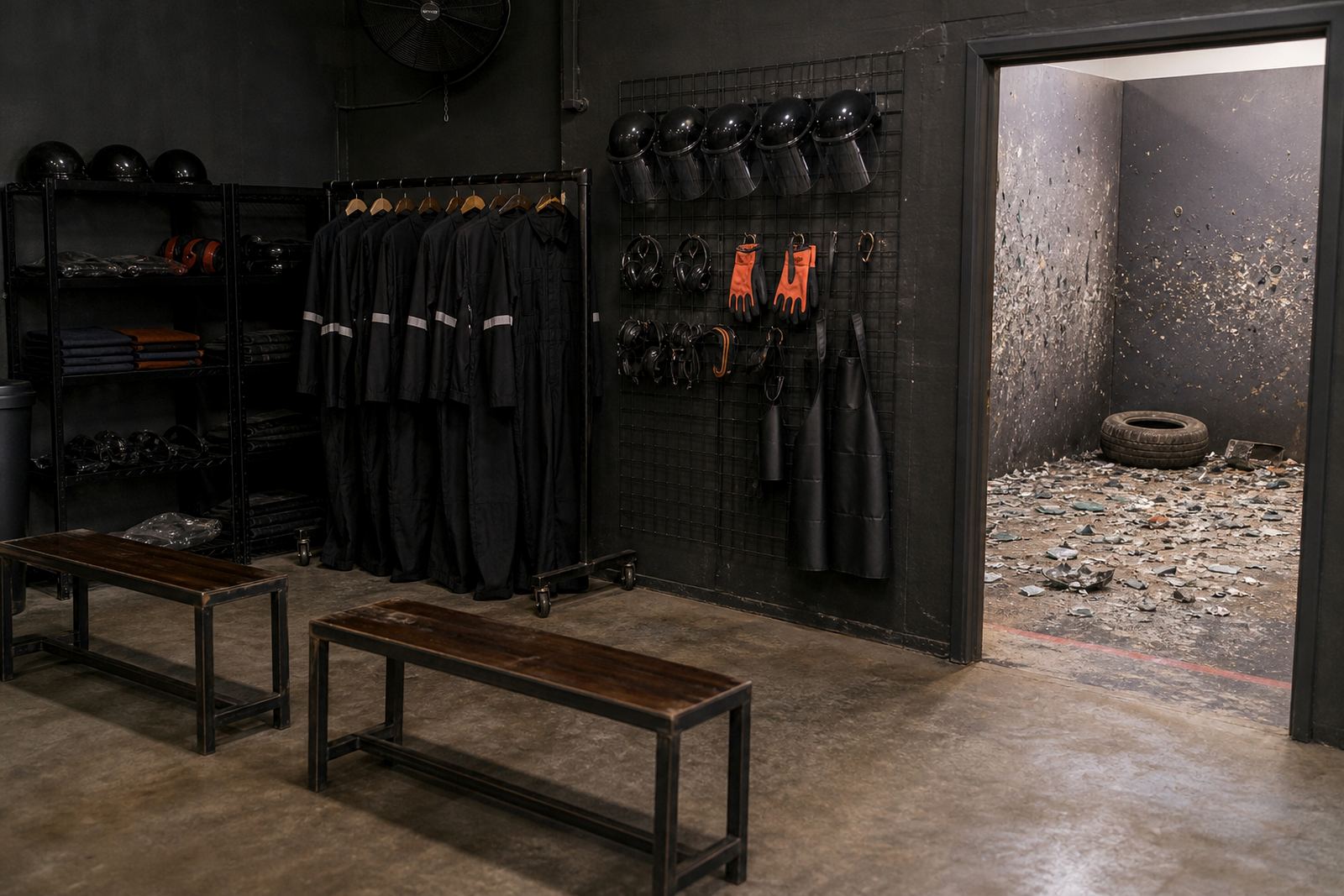
Any well-run venue should treat protective gear as standard issue. A helmet with a face shield helps protect the head and eyes from flying fragments. Gloves improve grip and help reduce cuts. Overalls protect clothing and skin, while closed shoes are essential because feet need proper protection from debris on the floor. These basics should be worn for the full session, not only for the first few minutes.
Staff should check that gear fits properly before entry. A loose face shield, oversized gloves or shoes that are not tied securely can create problems. If a participant arrives in sandals, heels or open footwear, they should not be allowed straight into the room. That might sound strict, but it is common sense. In a venue that sees corporate groups from Bellville, Paarl or Somerset West, the rule must stay the same for everyone.
- Helmet and face shield for eye and head protection
- Gloves for grip and hand safety
- Overalls to cover clothing and reduce exposure
- Closed shoes only, with secure footing
Room preparation is where safety work really happens
Before a group enters, the room should be checked and reset. That means removing loose items that do not belong in the session, clearing the floor and confirming that barriers, doors and any viewing points are secure. The staff team should also look for broken material from the previous session and clean it up properly. A room that has not been reset fully can create slips, trips and a poor experience for the next group.
Preparation also includes how items are placed in the room. A good layout gives people space to move, but not so much that people are forced into corners or narrow gaps. Staff should consider the number of participants, the type of event and how active the group is likely to be. A small private booking is different from a large company team event, so the room should be arranged with that in mind. That is proper venue work, not guesswork.
Supervision keeps the session controlled from start to finish
Even when people are having a good time, the room should never feel unmanaged. Staff supervision is there to keep the session steady and to step in if someone forgets the rules or starts moving too close to another participant. Supervisors should watch for poor posture, unsafe swinging and people taking turns too quickly without checking the space around them.
In practice, supervision also means knowing when to pause the session. If a participant’s gear slips, if someone becomes too excited or if a group is crowding the same area, staff should stop the action and reset the room. That kind of intervention is part of the service. It helps keep the experience enjoyable, not chaotic. A venue in Woodstock serving local clients as well as groups travelling in from Stellenbosch or Somerset West needs that level of control if it wants repeat bookings and safe events.
- One staff member should always be ready to intervene
- Sessions should be paused if gear is not fitted correctly
- Participants should take turns with clear spacing
- No one should enter the room without staff approval
Minimum ages and group rules need to be clear upfront
Age limits are important because the activity is physical and the room contains breakable material. Venues should set minimum ages clearly and apply them without exception. If a booking includes teens, the organiser needs to know the rules before the day arrives. The same applies to school groups, sports clubs and mixed family events. A clear age policy avoids awkward conversations at the door and helps staff prepare the right gear and supervision.
Group rules matter too. For team events, it helps to know how many people will be in each session, who the main contact is and whether the booking includes a special setup. For example, a corporate group from Cape Town might arrive after a roadshow in Bellville, while a birthday group from Paarl may need a slower pace and more guidance. Safe venues plan for these differences instead of using a one-size-fits-all approach.
A local example from Woodstock shows what good practice looks like
Imagine a Friday booking for eight colleagues from a company based near the CBD. They arrive in Woodstock after dealing with traffic, parking and a full week of work. The team is eager to get started, but the venue still follows the same sequence every time. Gear is checked, the briefing is given, the room is inspected and the group enters only when the supervisor is satisfied that everything is ready.
That is how a safe venue works in Cape Town. Not by relying on luck, and not by assuming people will figure it out on the fly. Safety comes from repeatable steps, tidy room preparation and staff who know what to watch for. When those basics are in place, the group can focus on the experience itself without unnecessary risk. It sounds simple, but simple is often what keeps people safe.