
A Good Fit for Staff Socials and Team Days
For work teams, a rage room session works best when the goal is to get colleagues doing something active together without needing sport, long speeches or a formal venue setup. It suits departments that want a break from the usual restaurant booking or bowling night, and it can be shaped for smaller groups or larger company outings. The setting is controlled, so people can join in at their own pace and still feel part of the same plan.
Teams from Cape Town, Stellenbosch, Paarl, Somerset West and Bellville often use this kind of session for year-end functions, staff appreciation days, project wrap-ups and internal social events. It also works well for companies with mixed ages and mixed fitness levels, since the activity is short, guided and easy to follow. Some groups want a lively icebreaker, others want a neat add-on before lunch or drinks nearby.
What the Session Usually Includes
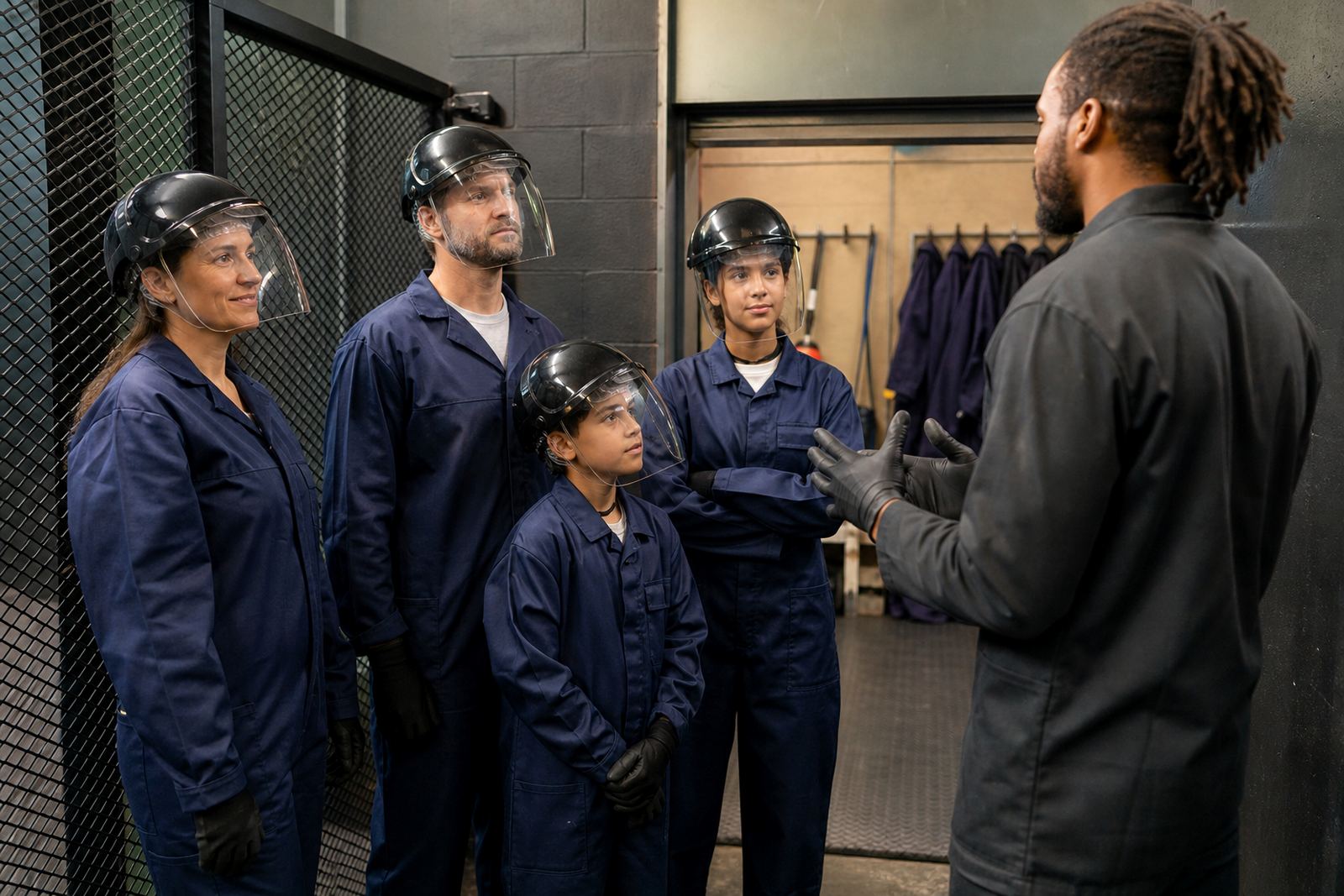
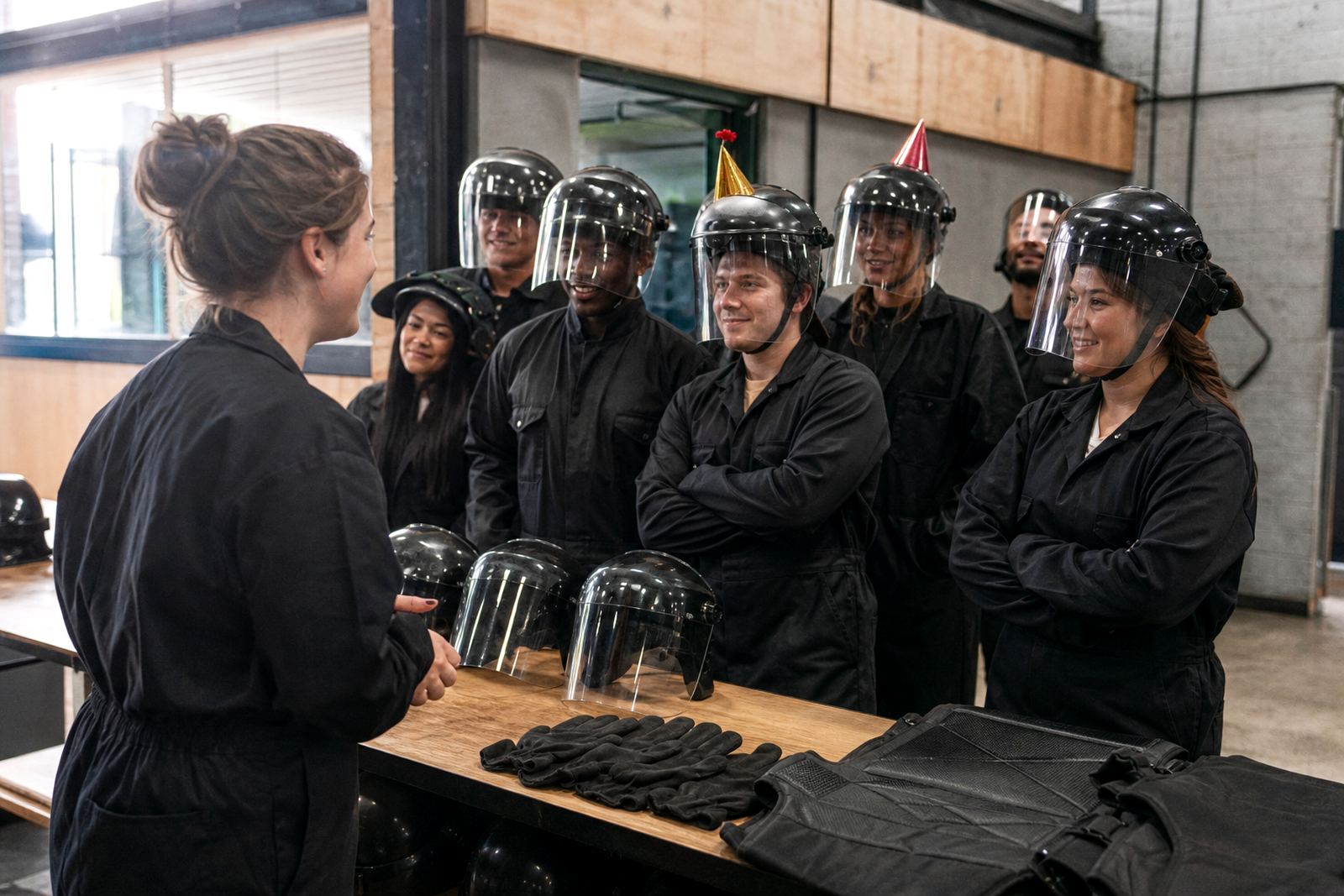
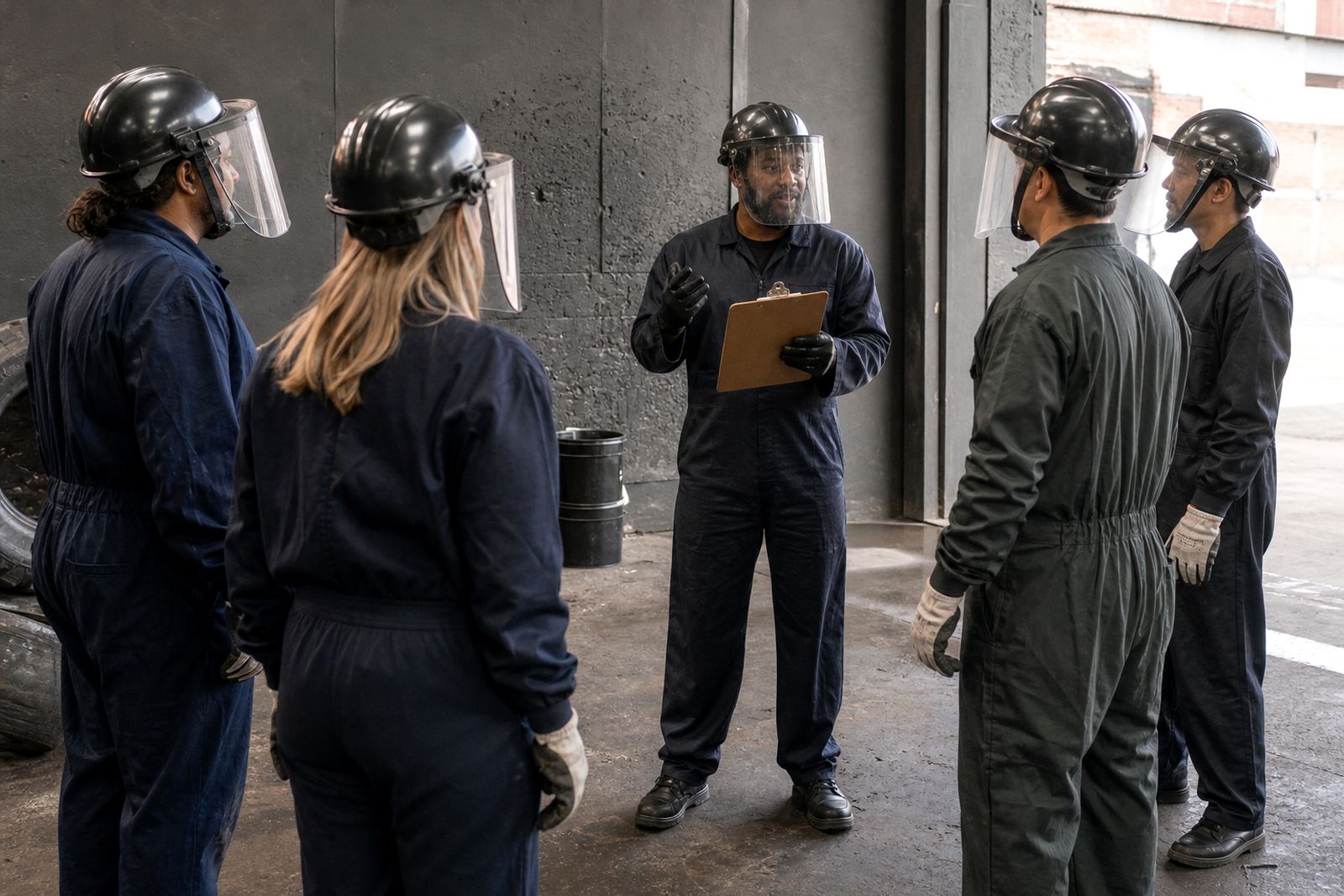
A typical work team booking is arranged around a clear start time, a safety briefing and a simple rotation so each person gets a turn. The team is issued protective gear before entering the smash area, and the facilitator explains how the session works, what may be used and what stays out of bounds. That first step matters because people arrive with different comfort levels, and the room needs to feel organised from the start.
- Helmet and face shield for head and eye protection
- Gloves for grip and hand safety
- Overalls to protect clothing
- Closed shoes required for all participants
- Briefing on movement, spacing and safe handling
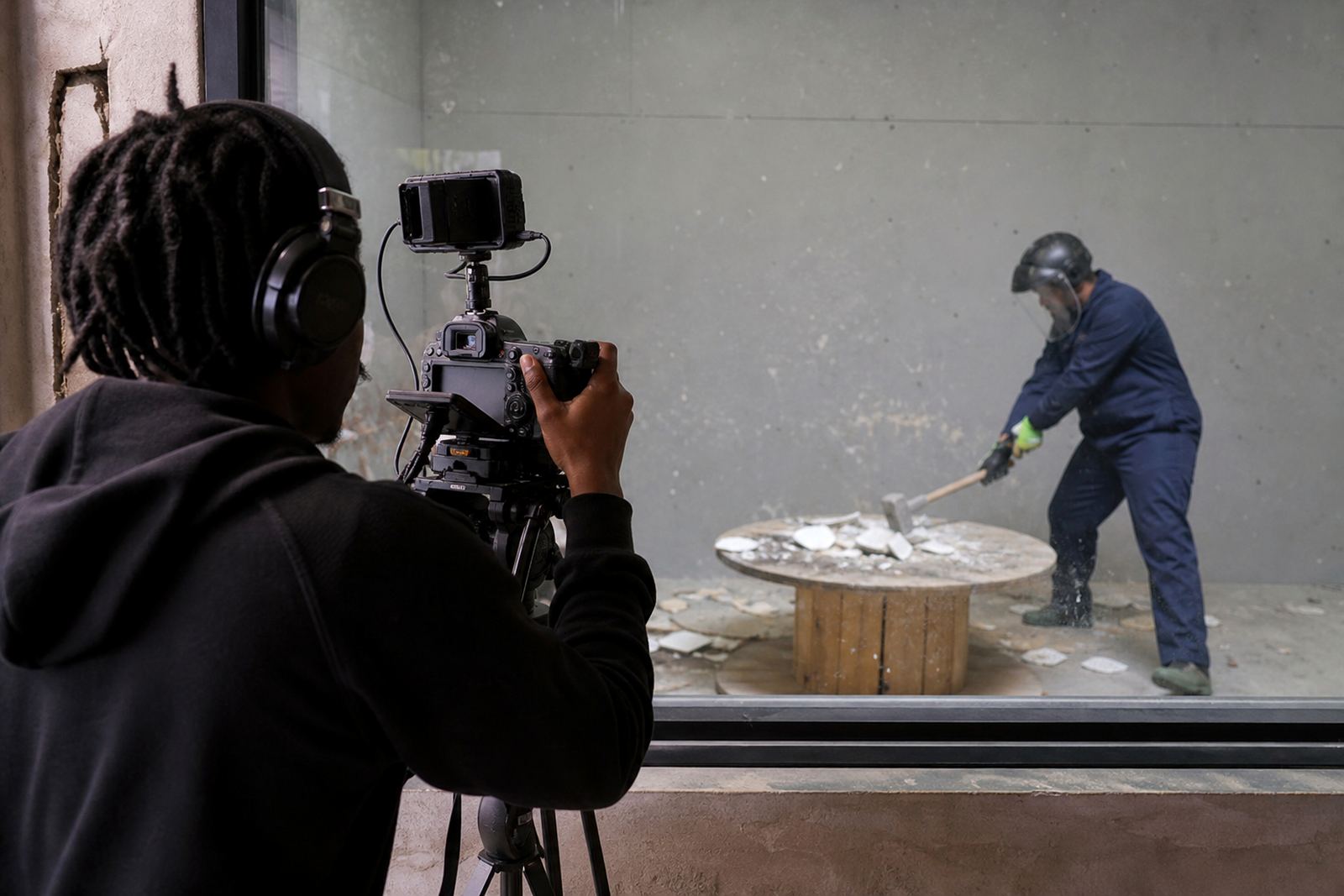
- Supervision throughout the session
For teams, the best setup is usually simple and practical. The room should have enough space for safe movement, a clear entry and exit point, and a place for people to wait between turns. If the group includes clients, suppliers or senior staff, it helps to keep the process tidy and on schedule so no one feels rushed or left standing around.
Layout and Planning Advice for Organisers
When planning a corporate booking, think first about the size of the group and how the day will run before and after the session. A team of 8 can move differently from a group of 24, so the flow matters. If colleagues are coming from different offices or suburbs, it helps to build in a buffer for traffic, parking and late arrivals, especially on rainy Cape Town days or when load-shedding affects road congestion and lift access in some buildings.
For Woodstock and nearby areas such as Observatory and Salt River, travel time is often short but parking can still be tight, so it is worth giving the team clear directions in advance. If the session is part of a longer event, many organisers pair it with a nearby restaurant, a meeting room or a short awards segment after the activity. That keeps the day moving and prevents dead time.
- Confirm group size early so the format can be matched to the number of people
- Share footwear rules before the day to avoid delays at arrival
- Plan for people who prefer a lighter role such as cheering, timing or photos
- Keep valuables at home or in a secure bag rather than bringing them into the activity area
- Allow a little extra time for briefing, gear fitting and changeover between turns
Common Mistakes Companies Make
The most common mistake is treating the session like a quick drop-in instead of a planned group activity. Work teams need enough time for everyone to settle, listen and understand the safety rules. Another mistake is assuming all staff will want the same level of involvement. Some people will go in straight away, while others prefer to watch first and join later. Both are fine, but the organiser should know that in advance.
Another issue is dressing for the day as if it were a casual braai rather than an active event. Open shoes, loose accessories and bulky clothing can get in the way. It also helps to avoid booking the session right after a heavy lunch or very late in the afternoon when people are already tired. A mid-day or early evening slot usually works better for corporate groups.
Lastly, teams sometimes forget that the activity is best used as a shared event, not as a contest that puts pressure on quieter colleagues. It should feel like part of the social function, not a performance review. The best bookings are the ones where people can laugh, rotate, and enjoy the structure without any awkwardness.
Budget Ranges in Rand for Team Bookings
For budgeting, it is useful to think in ranges rather than exact numbers, since the final figure depends on group size, session length, location and any event coordination needs. A small internal team session will usually sit in a lower budget band than a large staff function with added planning. If transport, venue support or mobile event setup is needed, that will also affect the total.
As a practical guide, many work teams start looking at a per-person spend in the low hundreds of Rand for a basic group session, then move higher when they want a fuller event format with extra coordination. For company functions with multiple departments, the overall budget may be set as a total event allowance rather than a per-head amount. It is best to build in some room for admin and any last-minute changes, because corporate groups often grow by a few people near the date.
If you are comparing options, ask what is included in the session, what gear is supplied, how the briefing is run and whether the format can be adjusted for a mix of staff levels. That gives you a clearer picture than chasing the lowest figure alone.
How SmashDown Handles Work Teams
SmashDown runs structured sessions from the Woodstock base in Cape Town for individual teams, group bookings and company events across the Western Cape. The team includes Luvuyo Mthembu as Managing Director, Anika van Wyk overseeing venue operations, Sibusiso Dlamini leading safety and briefings, Megan Pillay coordinating group events, Bradley Jacobs handling customer experience and Zanele Khumalo managing bookings and admin. That matters because corporate bookings usually need quick replies, clear planning and a steady hand on the day.
For work teams, the process starts with an enquiry through the contact form, followed by a practical discussion of group size, timing, location and event type. Whether it is a staff social, launch event, client entertaining or team-building day, the aim is to keep the session organised and straightforward. If your office is in Bellville, your branch is in the city centre or your people are spread across the Cape, the booking can be shaped around the group rather than the other way round.
The result is a session that feels active and well-managed, with enough structure to suit a workplace and enough energy to make it worth the trip.