
Why closed shoes are expected before anyone starts smashing
When people arrive for a rage room session, they are usually thinking about the fun part first. The gear, the briefing and the first swing all matter, but footwear comes before that. Closed shoes help protect feet from broken glass, sharp edges, dropped items and small fragments that can land on the floor even when the work area is well managed.
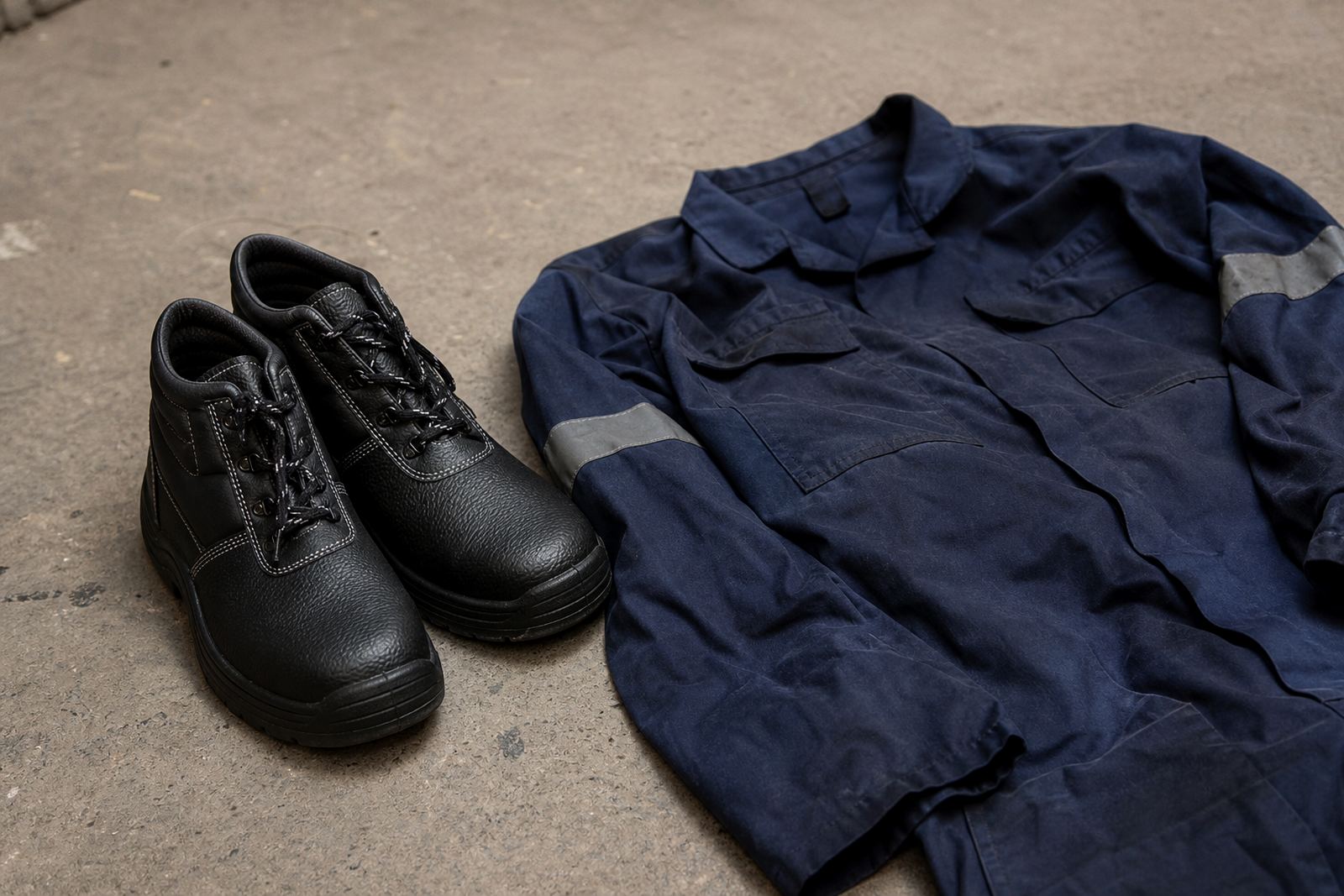
At SmashDown in Woodstock, closed shoes are treated as standard session prep, not as an optional extra. The reason is simple. A session involves movement, uneven surfaces in the work area and forceful actions that can send debris in more than one direction. A sturdy shoe with a full toe and heel gives a better barrier than sandals, slip-ons or open footwear.
This is also practical for South African conditions. If you are coming in after a day in the city, from a construction site, office or campus, your shoes should be able to handle walking, standing and a bit of impact. Closed shoes are part of making sure the session starts in the right way.
What counts as suitable footwear for a rage room session
People often ask what kind of shoe is acceptable. The short answer is that it should cover the whole foot and stay secure while you move. A closed sneaker, work shoe or sturdy trainer usually does the job. Thin slip-ons, open sandals, heels and loose footwear are not suitable because they leave too much exposed.
- Full toe coverage helps reduce the chance of cuts or bruising from falling pieces.
- Secure soles improve footing when the floor may have dust, fragments or water from cleaning.
- Good ankle support can help when you are stepping, turning or moving quickly.
- Snug laces or straps keep the shoe in place during active movement.
If you are booking for a birthday group, a staff social or a student event, it helps to send the dress guidance through early. That way people do not arrive in the wrong footwear and lose time sorting themselves out before the briefing.
How closed shoes fit into the full safety setup
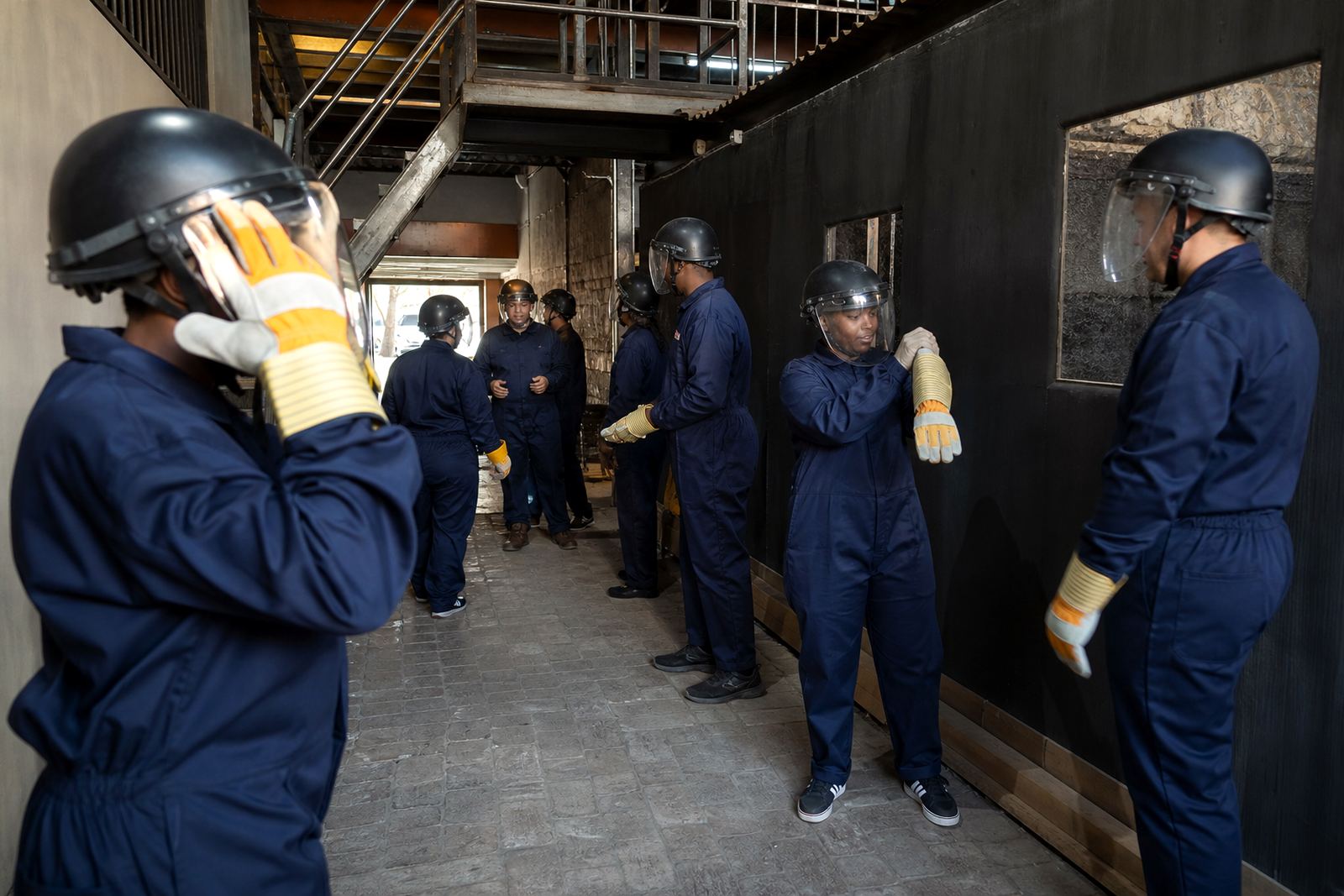
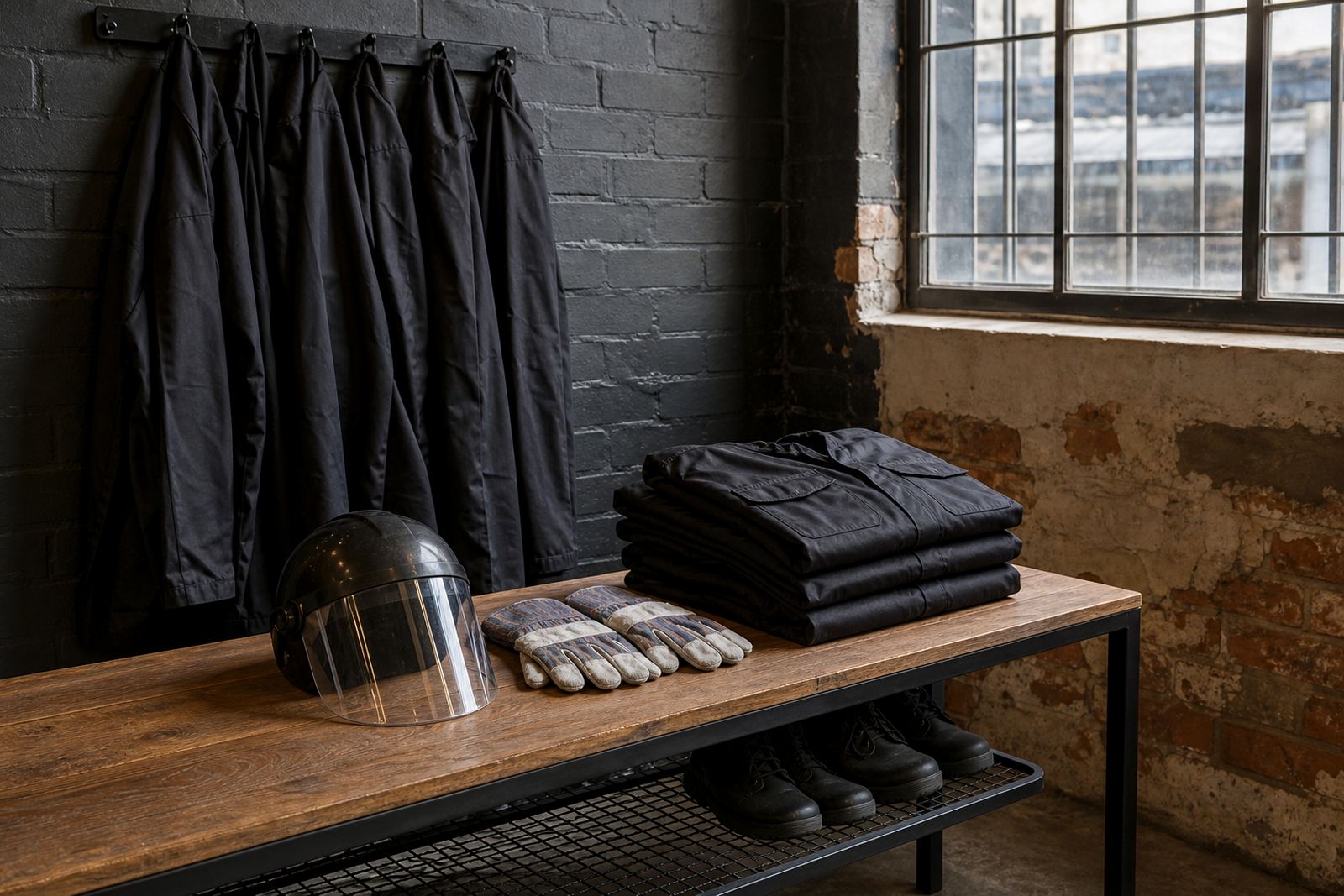
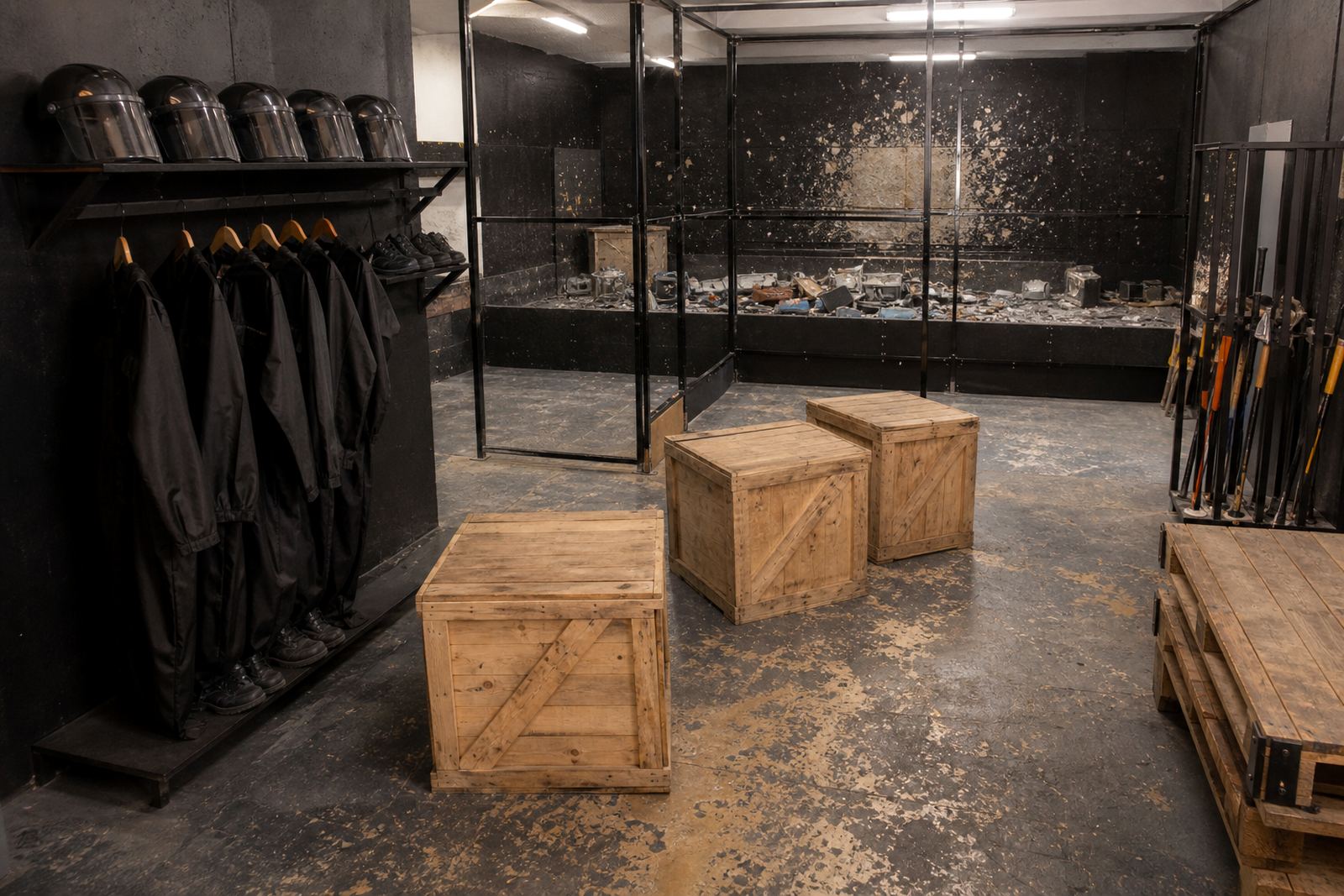
Closed shoes are only one part of the protection process. A proper session also includes a helmet, face shield, gloves and overalls, with a clear safety briefing before anyone enters the activity area. The aim is to reduce avoidable risks while keeping the session controlled and organised.
The briefing is important because the gear works together. A helmet and face shield help with head and eye protection, gloves help with grip and hand safety, and overalls help cover clothing from dust and fragments. Closed shoes complete that setup by protecting the feet and helping the participant stand more securely.
For group events, the person in charge usually appreciates this because it keeps the session moving. Fewer last minute issues means more time can be spent on the activity and less time on swapping shoes or making exceptions. In a busy venue, that matters.
Why open footwear is a problem, even for short sessions
Some people assume that because a rage room session is brief, footwear does not matter much. In practice, that is exactly when people get careless. A short session can still involve repeated steps, sudden movements and pieces on the floor after an item has been broken. Open footwear leaves toes and the front of the foot too exposed for that kind of environment.
There is also the issue of grip. In a controlled smash room, the surface is managed for safety, but participants still need to move with care. A shoe that fits properly can help with balance and direction, especially if someone is stepping back quickly after a strike. That matters for adults, and it matters even more in group sessions where people are moving one after another.
If you are planning a session from Stellenbosch, Paarl, Somerset West or Bellville, it is worth checking footwear before leaving home. That small check can save time at the venue and keep the session on track.
A practical Cape Town example from the real world
Think of a mixed group arriving from Woodstock, Salt River and Observatory for a Friday team event. One person comes straight from work in smart casual shoes, another arrives in trainers, and a third turns up in open sandals because it was hot in Cape Town that day. The first two are usually ready to go after the briefing. The third person has to sort out footwear before joining the session, which can hold up the rest of the group.
That is why closed shoes are part of session prep from the start. Cape Town weather can change quickly too. On a warm day people dress light, then the wind picks up or load-shedding adds delays and the whole plan shifts. If you already have proper shoes on, one less thing needs attention when you arrive.
- Check your shoes before you leave home or the office.
- Bring a spare pair if you are coming from another event.
- Choose footwear you can walk in comfortably.
- Make sure the shoe fully covers toes and heel.
For groups and events, closed shoes keep the schedule moving
Closed shoes are especially important for group bookings, private events, birthday sessions, hen and stag groups, student bookings and staff socials. In these settings, a smooth start matters because the whole booking is often planned around a set time slot and a shared experience. When everyone arrives ready, the team can focus on the briefing and the session itself.
It also helps with event coordination. If you are organising a launch event, a sports club outing or a content shoot, you want the practical details settled before people arrive. Footwear is one of those details that looks minor on paper but can become a delay on the day. Closed shoes reduce that risk and show the group that the venue safety rules were taken seriously.
For visitors who are not familiar with rage rooms, the rule may feel strict at first. Once they see the setup, the reason becomes clear. The gear is there to keep things controlled and the footwear rule is part of the same approach.
If you are unsure, ask before the day of your booking
Not every shoe that looks closed is automatically suitable, so if you are unsure it is better to check before the booking day. That is especially useful if you are arranging transport from outside Cape Town or trying to fit the session between other plans. A quick check ahead of time avoids confusion at the venue and helps everyone arrive prepared.
SmashDown serves individuals, groups and event bookings from Woodstock and across the wider Cape Town area, including Stellenbosch, Paarl, Somerset West and Bellville. Whatever the occasion, the same basic advice applies: wear closed shoes, listen carefully to the briefing and come ready to move safely. It is a small requirement, but it makes a real difference once the session starts.
When the footwear is right, the rest of the prep becomes straightforward. That is the point. Less fuss, better footing and a cleaner start to the session.