
What happens the moment a session ends
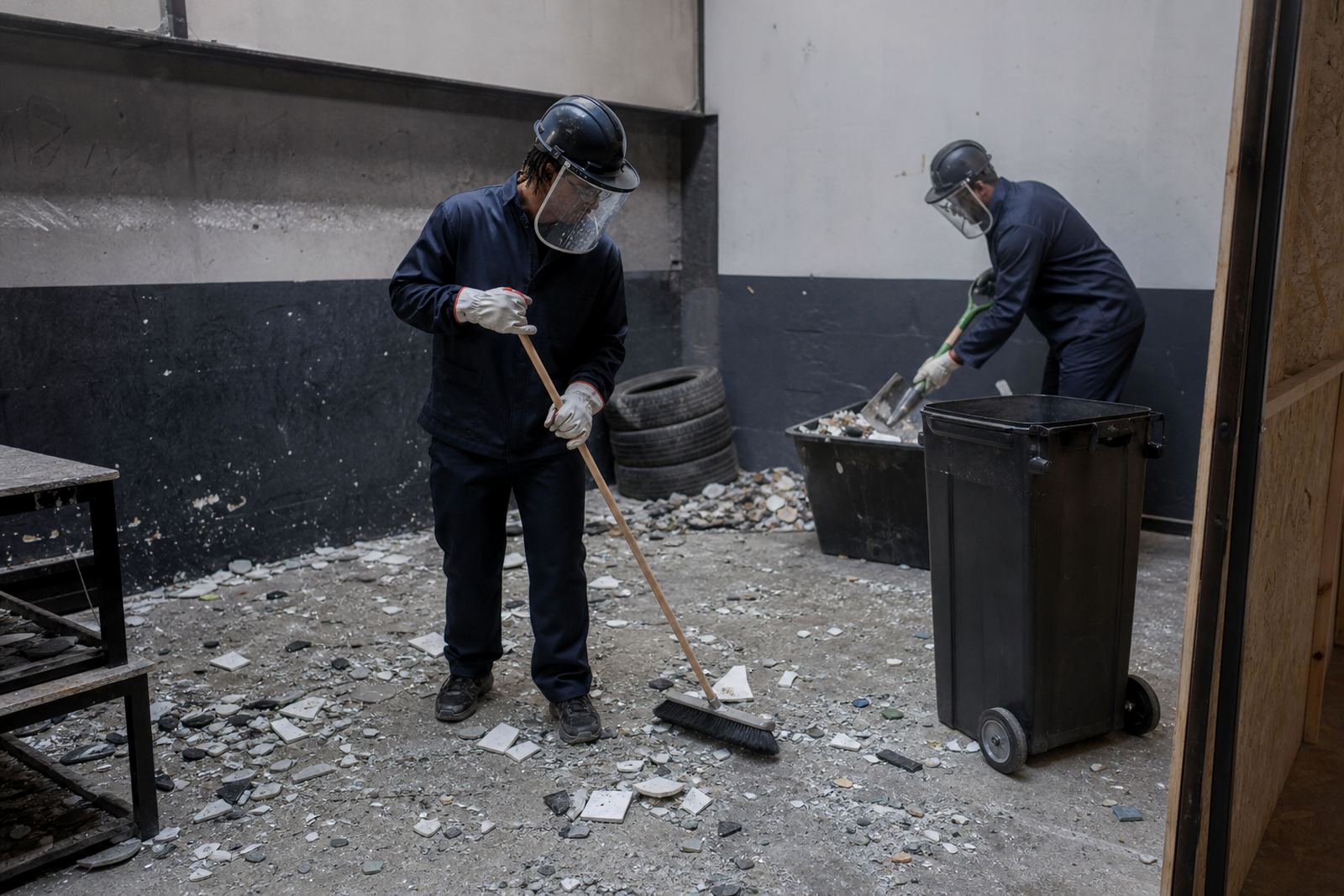
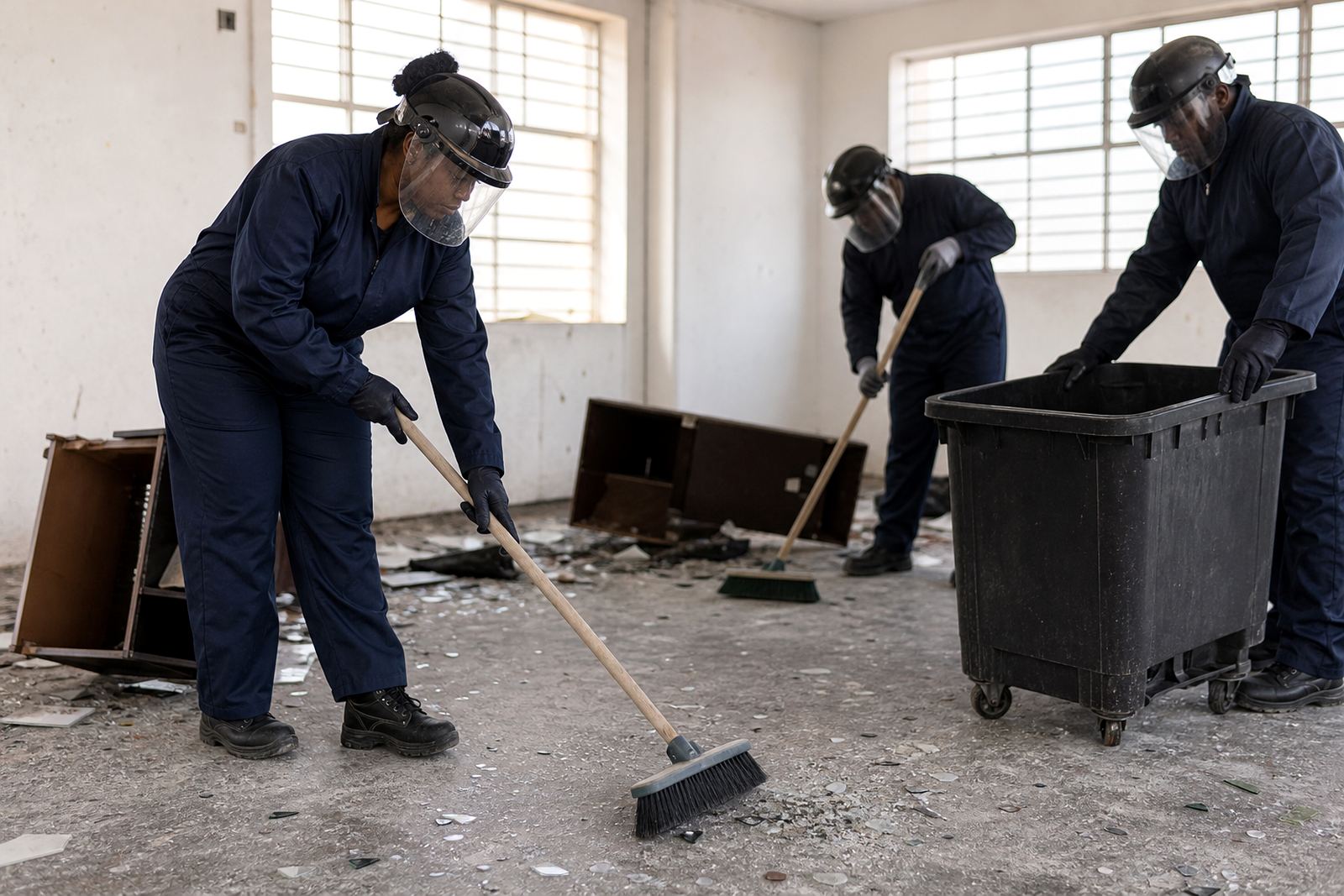
When the last item has been smashed, the clean-up starts straight away. The floor is checked first, then the larger pieces are collected and moved out of the room in a controlled way. Any staff member working in the space knows the sequence: stop the session, confirm the room is clear, then begin the reset.
This is especially important in a busy Woodstock venue where individual sessions, group bookings and team events can run back to back. A tidy handover between bookings keeps the day moving without rushing the safety checks. In practice, it means no one enters the room until the area has been assessed and the broken material is managed properly.
Safety gear stays on until the room is clear
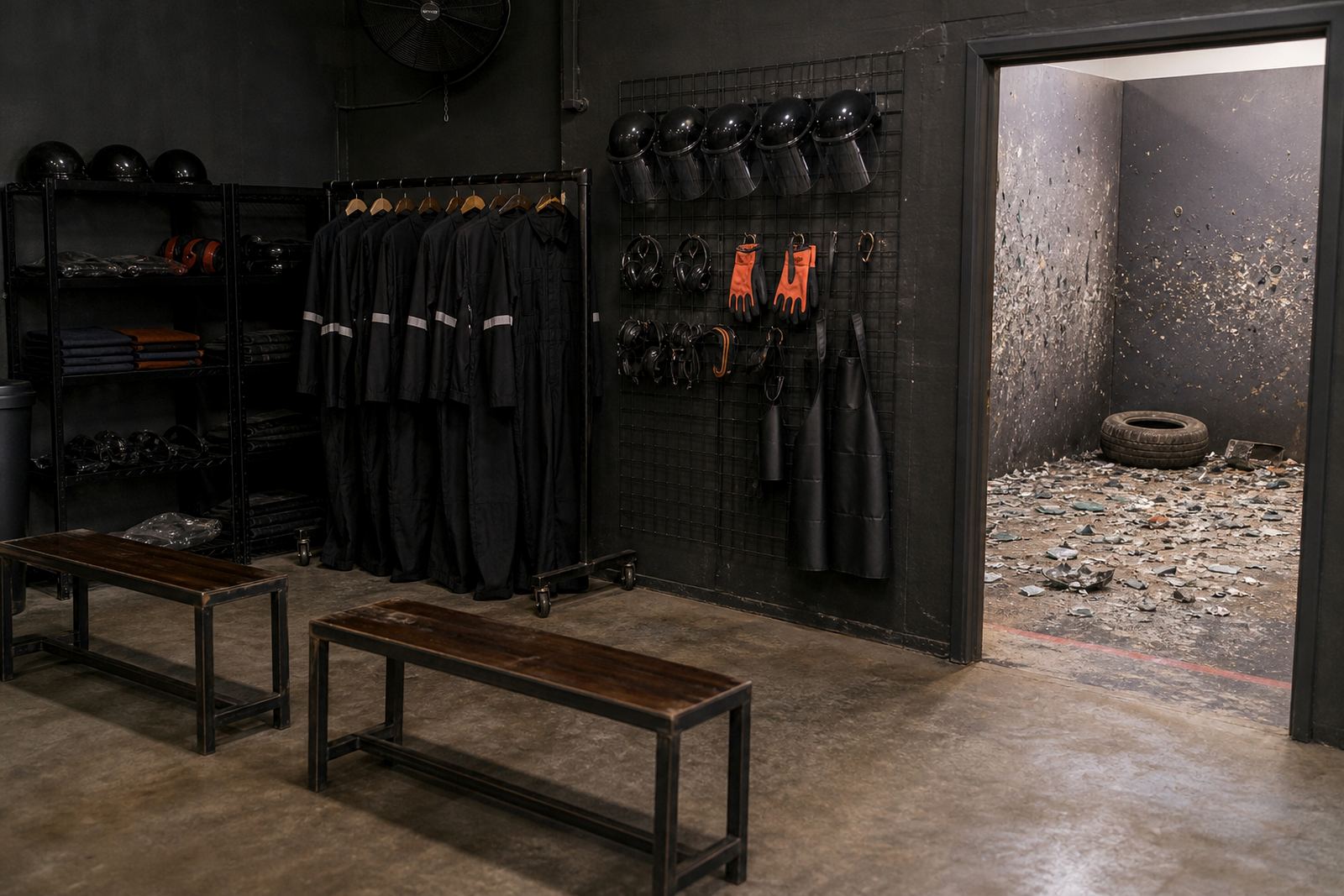
Protective gear is not only for the smashing itself. Staff stay properly protected during clean-up too, because shards and fine fragments can still cause injury after the session has ended. Good venue practice is to keep the same level of caution from start to finish, not just during the active part of the booking.
- Helmet and face shield for head and eye protection
- Gloves for handling broken material and cleaning tools
- Overalls to reduce contact with dust and sharp edges
- Closed shoes with a firm sole for grip and foot protection
- Briefing before every session so guests know where to stand and how to exit safely
That approach matters in Cape Town where people often arrive straight from work, campus or a nearby event. If the site is organised, guests can move through the session safely and staff can reset the room without confusion.
Sorting broken items and removing waste properly
Post-session waste is not just swept into one pile. Broken items need to be separated from general waste where required, and the floor must be cleared of fine dust and smaller fragments. In a commercial setting, that means using the right bags, containers and collection points so the clean-up is quick and safe.
For venues in the city bowl and surrounding suburbs, municipal rules and waste handling habits matter. A space in Observatory or Salt River may need to turn over several times in a week, so the clean-up routine must be consistent and practical, not improvised. If one room is rushed, the next group feels it.
- Remove large fragments before sweeping
- Check corners, skirting lines and under fixtures
- Separate reusable room equipment from waste
- Seal bags before moving them through public areas
- Do a final floor scan before guests return
Room reset is about more than making it look neat
A proper reset means the room is ready for the next booking in every practical sense. Tools are put back in their places, protective gear is checked, the floor is clear and the briefing area is set up again. If anything was used up during the session it is replaced before the next group arrives.
The best venues work on a repeatable routine. That routine helps with private events, birthday bookings, student groups and corporate sessions because each group should arrive to the same standard. It also helps with timing. If a venue has a launch event in the afternoon and a staff social in the evening, the reset has to be orderly and fast without cutting corners.
Why the cleaning crew matters as much as the session host
The person leading the booking often gets the attention, but the clean-up crew keeps the whole operation steady. They know which surfaces need extra attention, how to move through the space without blocking access, and how to spot wear that should be reported before the next session. That is a quiet but important part of venue management.
At a site serving Cape Town, Stellenbosch, Paarl, Somerset West and Bellville, the team also has to deal with different group sizes and different expectations. A corporate group may need a faster turnaround, while a family booking may need a little more time for briefing and sorting. The clean-up process must flex without becoming messy or inconsistent.
- Checking for damage to barriers, walls and floor coverings
- Flagging any tool or gear that needs replacement
- Reviewing the room for missed fragments or dust
- Confirming the next booking setup is complete
A local Woodstock example shows how the reset works
Picture a Friday afternoon in Woodstock, with one group finishing up and another arriving later for a team event. The first session ends, staff guide guests out, and the room is closed off for cleaning. Large pieces are removed, the floor is checked twice, and the gear is returned to its storage point. The briefing area is then reset so the next group can be welcomed without delay.
That kind of routine sounds simple, but it is what keeps the venue dependable. In a busy part of Cape Town where traffic, weather and load-shedding can all affect timing, a clean and organised reset helps the day run properly. It also gives guests confidence that the venue takes safety seriously from the first briefing to the final sweep.
For bookings across Woodstock, Observatory, Salt River and the wider Cape Town area, this behind-the-scenes work is part of the service. Guests may only see the smashing, but the clean-up is what makes the next session possible.